
Tank placement that suits the machine body
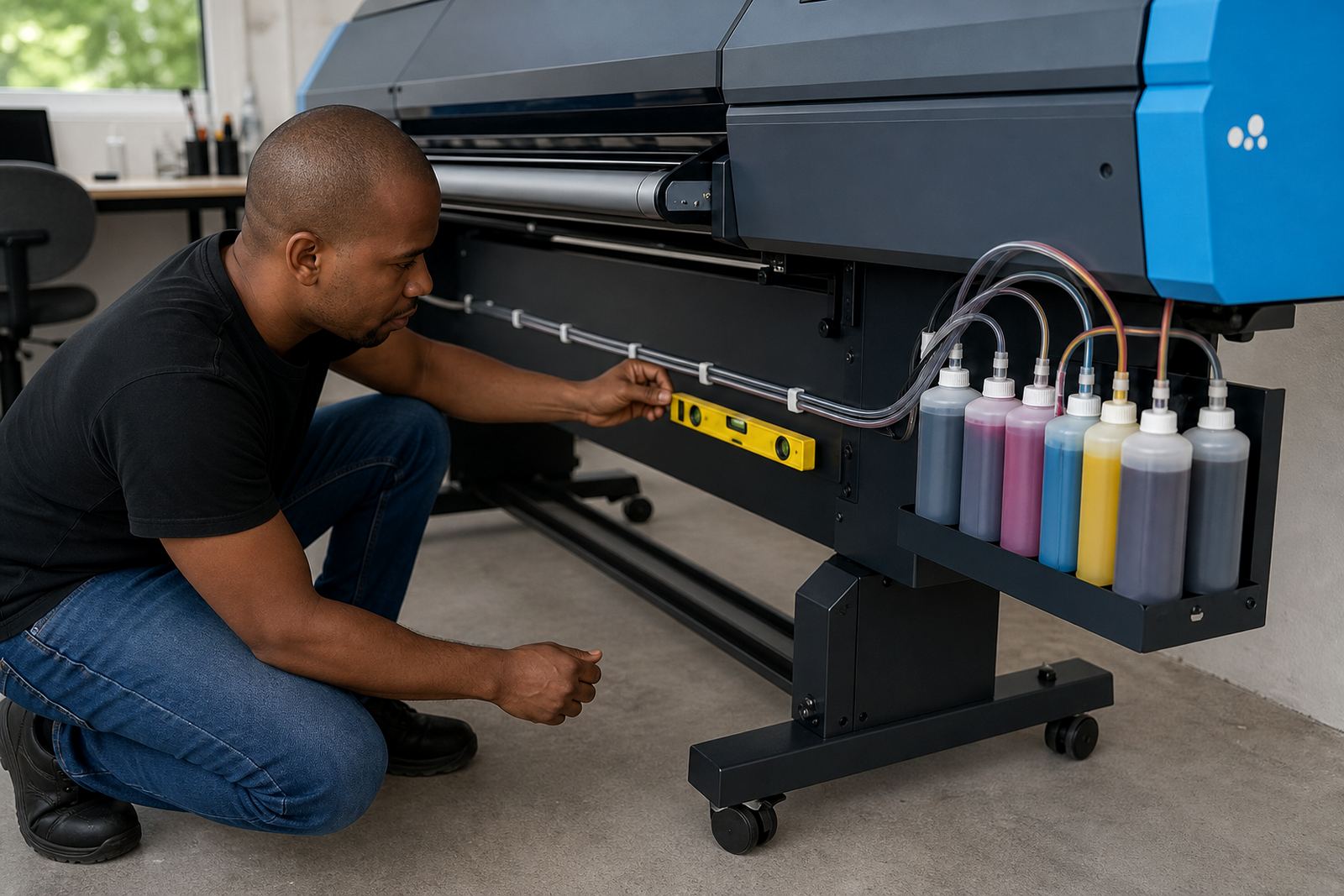
A continuous ink system works best when the tanks sit at the right height, stay level and do not tug on the carriage during movement. We look at the printer frame, the side clearance and where the tubes can travel without snagging on covers, trays or cable runs.
Small benchtop units, workgroup printers and wider format machines all need different handling. A unit that sits too high can flood, while one that sits too low can starve the line and cause faded output or broken colour bands. On a busy floor, neat placement also helps reduce accidental knocks when papers, rolls and tools move around the station.
- Tank height set for steady ink flow
- Base placement checked for level sitting
- Carriage movement checked with covers open and closed
- Space left for cleaning access and refill work
Tubing routes that keep the carriage moving freely
Tubing has to flex without pulling, pinching or forming tight loops. We route it so the carriage can travel its full path and still leave enough slack for left and right movement. If tubing runs too taut, the printer can begin to make noise, stop mid-job or mark the page with missing channels.
Where needed, we tidy the line path with clips or guides so the hose stays away from rollers and paper paths. That matters on machines used for labels, artwork proofs and poster work, where a light snag can waste a long sheet and throw off colour registration. For coastal Durban conditions, clean routing also helps keep dust and humidity from sitting in awkward corners around the setup.
First-fill checks before the first proper run
The first fill is where many CISS issues show up, so we take it step by step. We check that the right tank is feeding the right colour, that air has moved through the line and that the printhead has pulled enough ink to form a clean pattern. If the system is not primed properly, the first pages often show gaps, weak blocks or mixed colour edges.
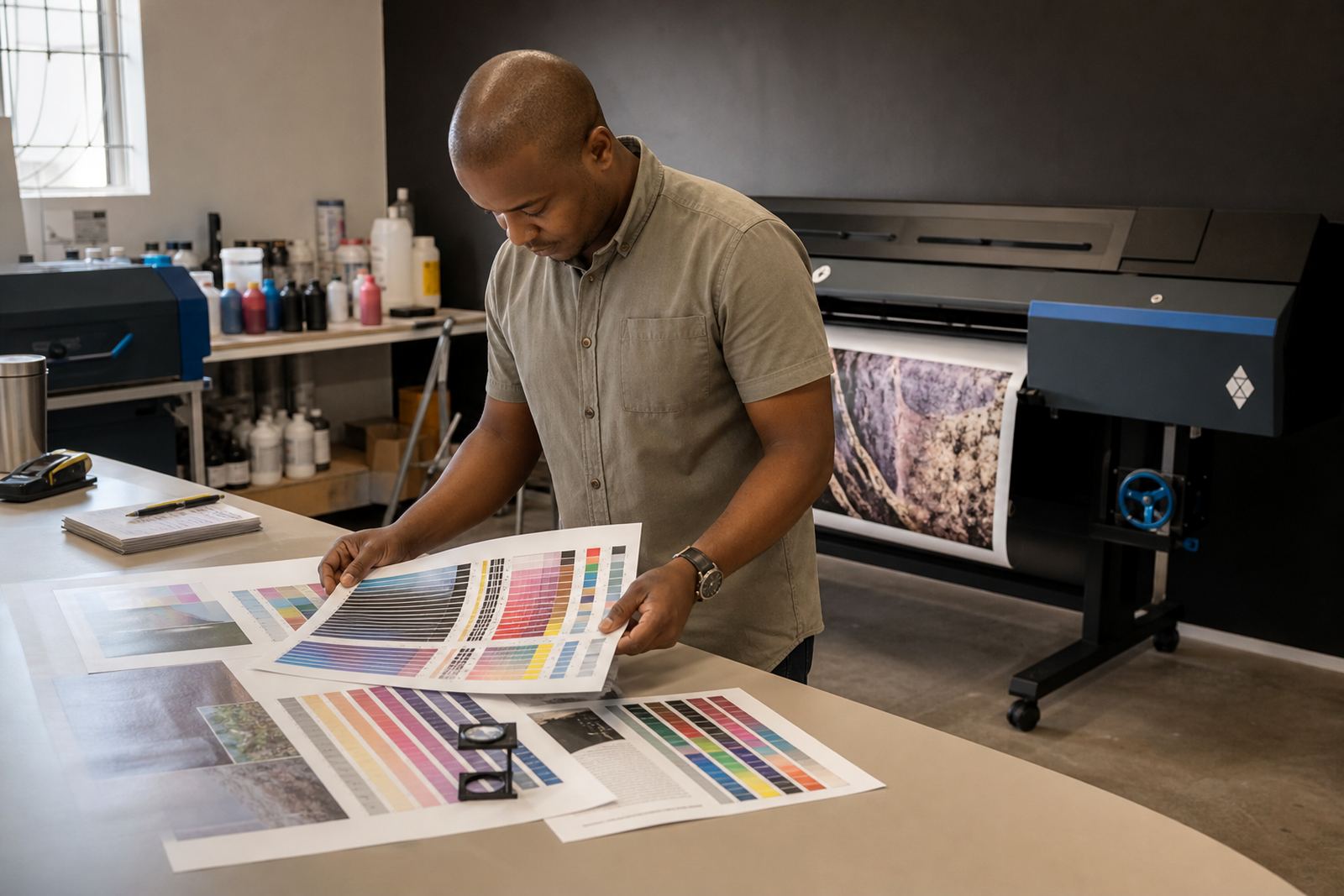
Our checks include a visual test of the tanks, a line inspection for bubbles and a nozzle pattern review after the first fill. If the machine has any protective seals, transport plugs or vent issues, those are handled before the system is put into normal use. This is also where we can spot a dye and pigment mismatch, which is a common cause of poor colour handling on mixed print jobs.
- Tank fill level checked before priming
- Air bubbles traced through the lines
- Nozzle pattern reviewed after fill
- Ink type matched to the intended work
What is included in the setup service
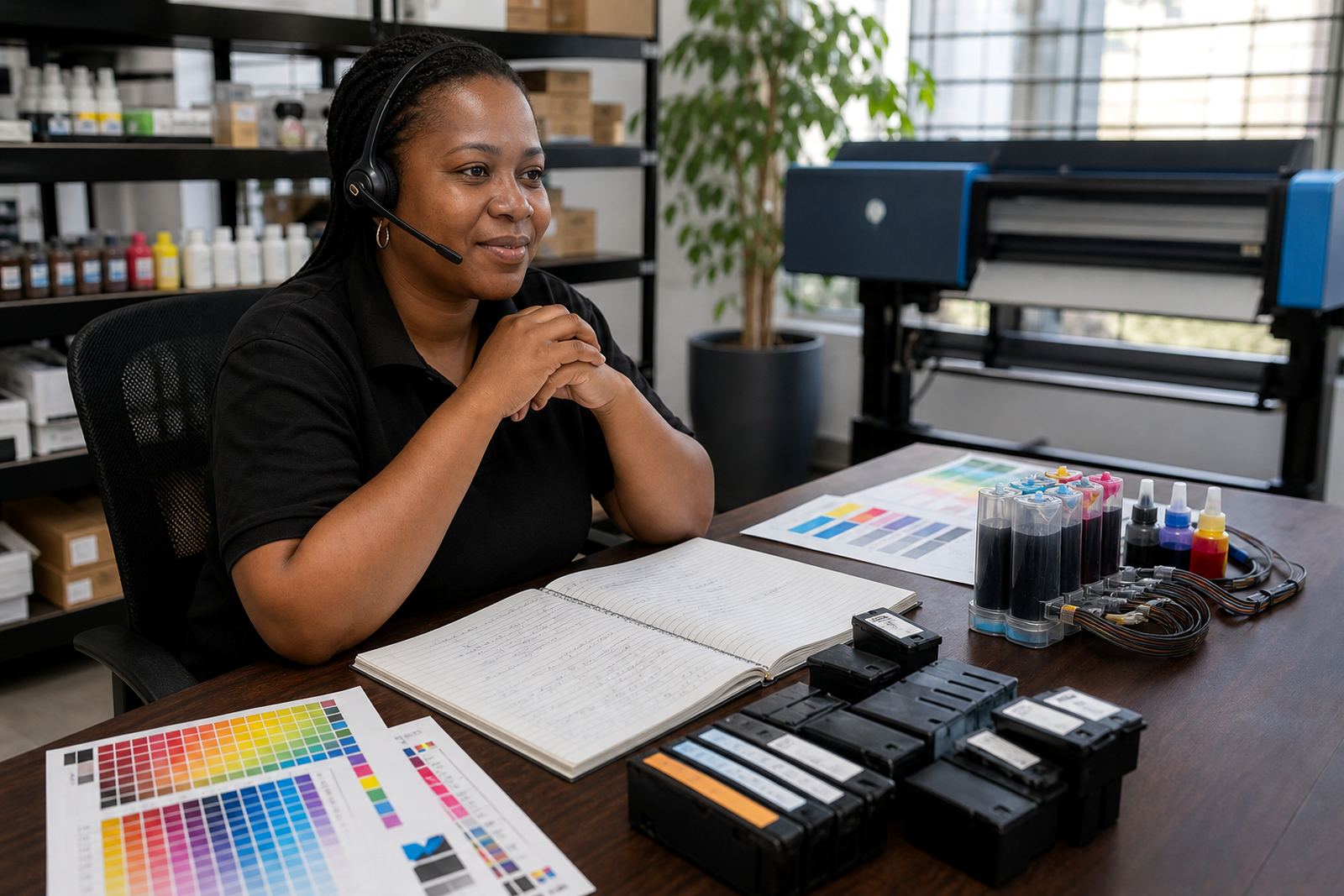
InkEx handles the practical parts that make a continuous system usable in an office or studio setting. We do not leave the job at a loose tank and a hopeful test page. The service is built around the fit, the flow and the first print results, with advice that suits the machine model and the work it does.
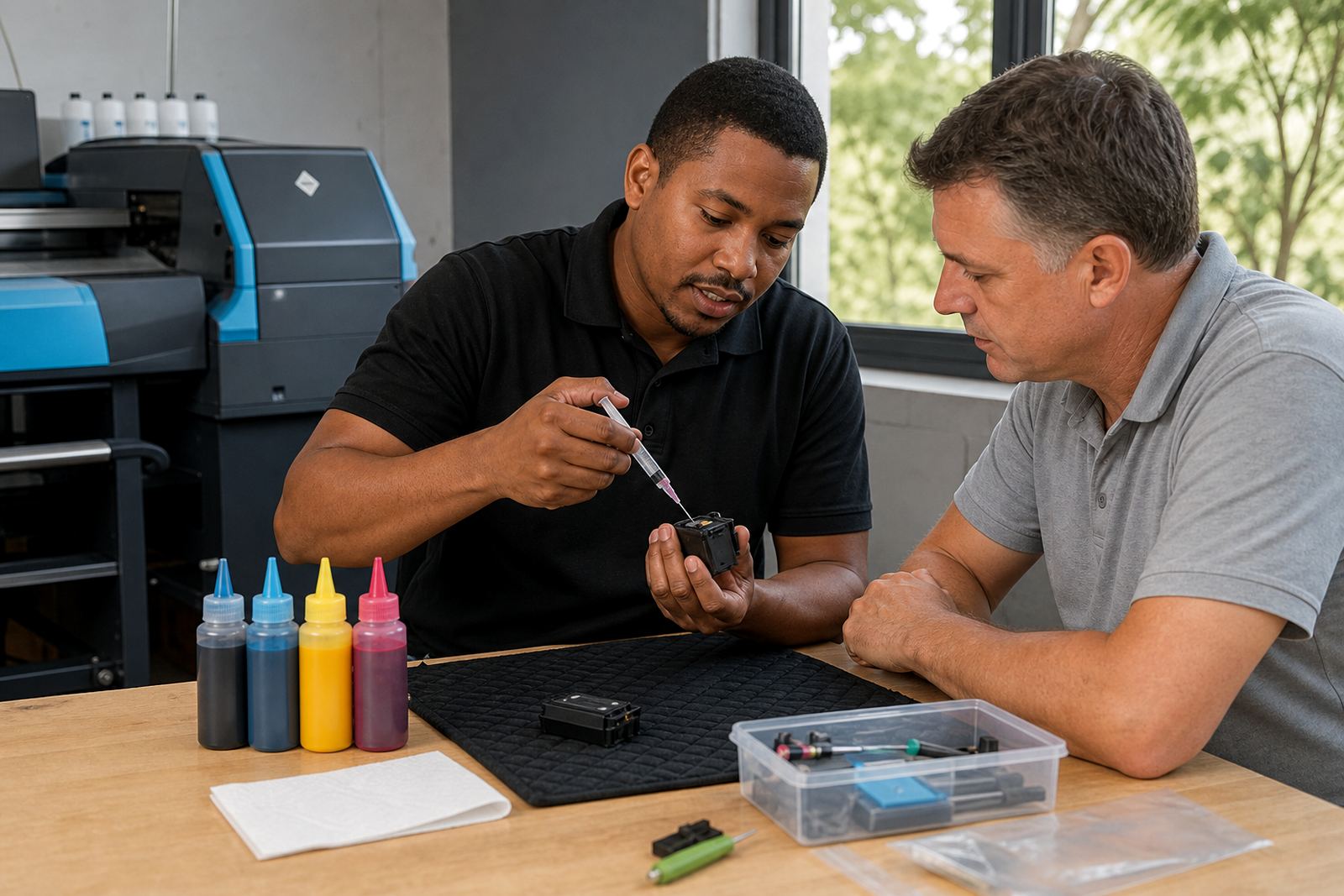
Included support can cover refill kits, initial loading, printhead care, nozzle check support and chip reset help where the cartridge or system uses one. We also explain when a dye ink is better for vivid colour work and when a pigment ink is better for sharper text, water resistance and office files that need more durable marks on paper. Empty cartridges can be kept aside for return where the client uses the empty return programme.
- CISS setup help and tank alignment
- Refill kit handling and first-fill support
- Printhead care and nozzle check support
- Chip reset guidance in general terms
- Empty return handling where applicable
How the work is handled in Westville and beyond
Jobs from Westville, Durban and nearby areas can be brought in for setup checks, while courier delivery supports clients in Pietermaritzburg, Johannesburg, Pretoria and Cape Town. Wide-format print shops often send in machines after a refill issue or a colour drop on one channel, while smaller offices usually want a cleaner setup from the start.
We keep the process practical. The machine type is noted, the ink family is checked, the tank layout is planned and the first run is watched closely. Where the machine has been idle, we may also suggest a nozzle check before full use, because dried ink can affect flow even when the tanks are filled correctly. Ballito, Hillcrest and other KZN areas can be handled in the same working pattern through courier and local support.
Pricing that follows the system, not a flat guess
Pricing is shaped by the machine size, the number of tanks, the condition of the existing cartridge set and whether the job needs refill help, chip support or extra leak checking. A small office printer takes less work than a wide-format unit with long lines and multiple colour channels, so the quote follows the setup rather than a fixed one-line figure.
Where a client only needs guidance and a parts check, the cost sits differently from a full bench setup with tubing routing, priming and print tests. We also factor in whether the job uses dye ink, pigment ink or a mixed workflow, because each one needs different handling at the nozzle and paper stage. That keeps the pricing clear enough for ordering and avoids guesswork when the system is being planned around regular print use.
Aftercare for smooth printing after setup
Once a system is in place, a few habits protect the results. Keep tanks upright, avoid squeezing the lines during cleaning, and do a nozzle check if the machine sits unused for a while. If colour shifts or a band drops out, the cause is often a trapped bubble, a low tank or a clogged path that needs careful checking rather than force.
We also guide teams on recycling empties, top-up handling and basic printhead care so the setup does not get spoiled by rough refilling. For studios and offices that print mixed work, a small stock plan helps keep the right ink nearby and avoids rushed refills at the wrong time. The aim is steady output, cleaner handling and fewer wasted pages.
Key facts
| Service area | Westville, Durban with courier support across South Africa |
|---|---|
| Main use | Continuous ink system setup for offices, studios and wide-format print shops |
| Setup checks | Tank placement, tubing routing, first-fill checks, nozzle pattern review |
| Ink types | Dye ink and pigment ink guidance for different print work |
| Add-on help | Chip reset guidance, leak checking, printhead care, colour balance help |
| Parts handling | Refill kits, tank alignment, empty return programme support |