
What leak checking covers on a working printer line
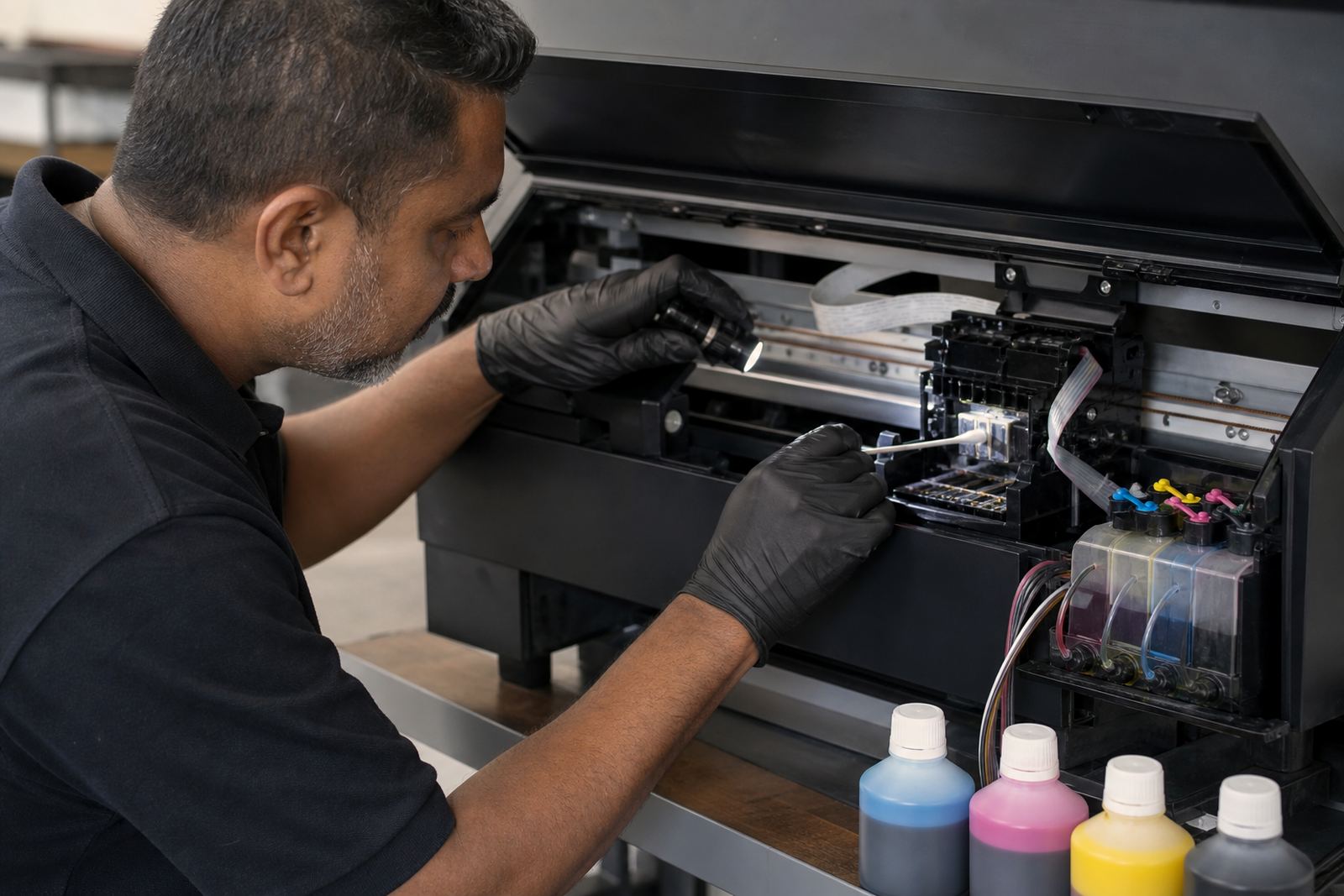
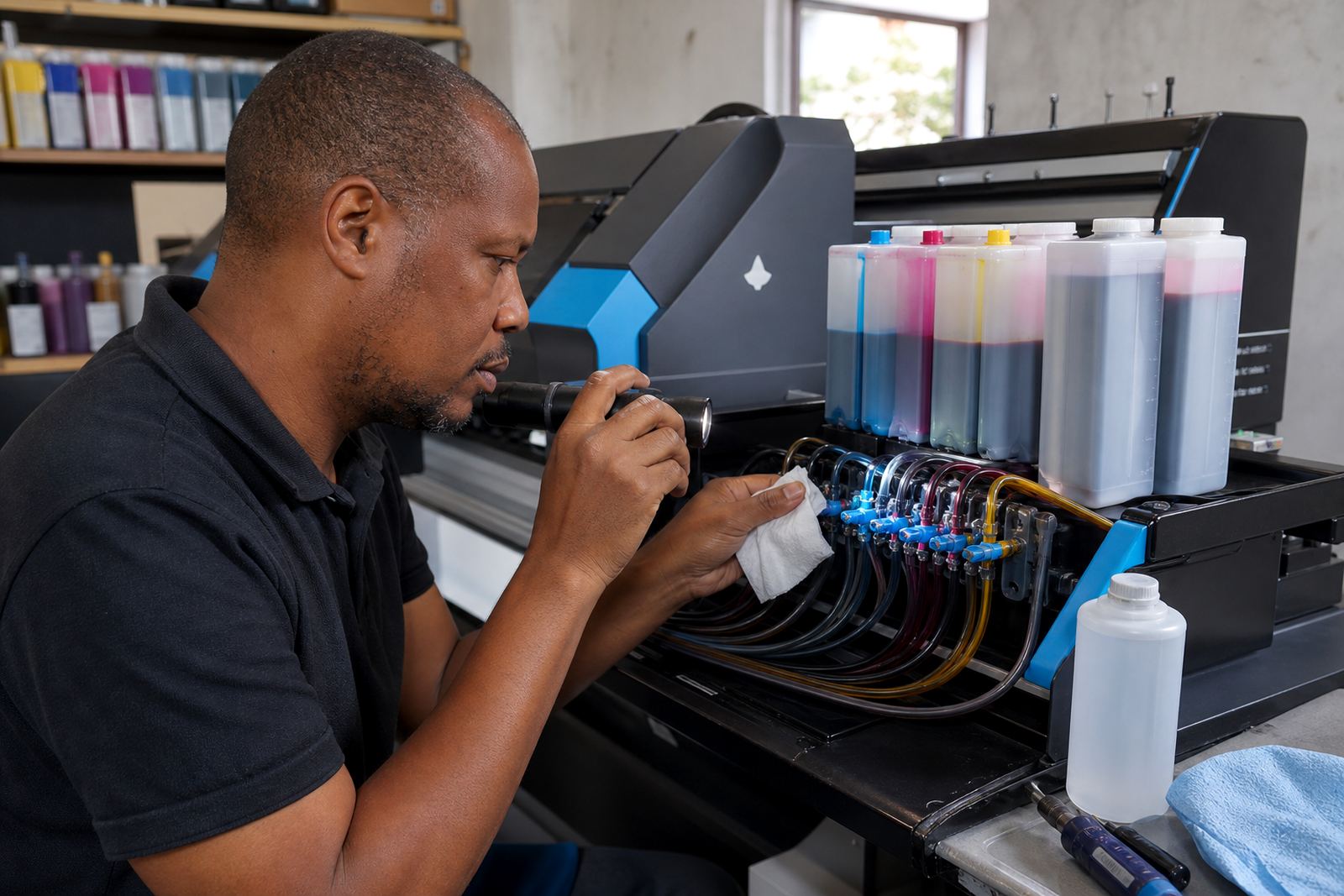
Leak checking is more than wiping away a puddle. We inspect the cartridge body, fill port, tubing route, bottle seals, valve points and the area around the printhead for seepage. Where a system has been topped up many times, small cracks or worn grommets can start drawing air instead of holding ink where it should stay.
We also look at the ink type in use, because dye and pigment behave differently when a system has been handled roughly or left idle. Dye ink usually flows more freely, while pigment ink can leave solids behind if it is not kept moving cleanly through the line. That matters for nozzle health, colour consistency and keeping the feed path clean.
- Drips from refill ports and caps
- Seepage around tubing joins and bends
- Air entry at seals, clips and connectors
- Ink staining near carriage paths and trays
- Signs of blocked vents or overfilled reservoirs
The faults we isolate before more ink is lost
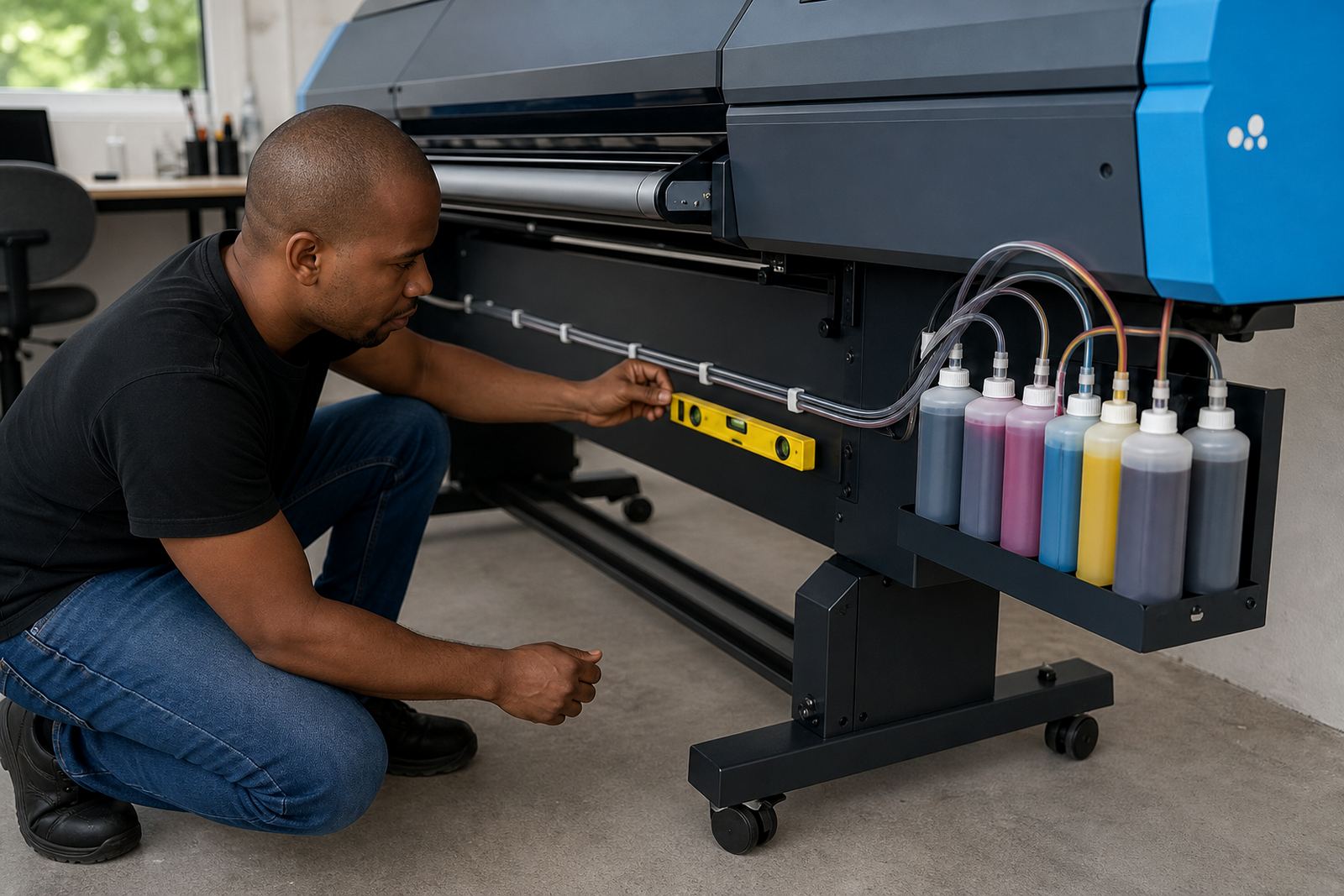
Some leak problems are obvious, others only show up after a few prints. A cartridge may look sound but still lose ink through a warped seal. A CISS bottle can appear full while a slow drip has been tracking through the base of the unit. On wider systems, tubing can pull apart when a carriage moves hard against a tight bend.
We trace the path from the supply point to the printhead and note where the loss begins. If there is air in the line, we check whether it came in through a loose cap, a cracked section of tubing, or a refill point that has not been seated properly. In some cases, the issue is not the ink itself but an uneven fill that leaves too much pressure in one part of the system.
- Loose cartridge seals
- Damaged tubing runs
- Blocked or open vents
- Overfilled chambers
- Residue around chip contacts and housing edges
How we work through a leak check
The process starts with the system as it arrived, so we can see the real fault pattern. We then inspect the cartridge or refill unit, clean visible residue, test seals and watch for fresh wet spots while the unit sits under normal handling. Where useful, we re-seat tubing, balance the ink level and check whether the cartridge chip is reading correctly.
For offices and studios, the goal is to get the supply path stable enough for normal print runs without wasted pages. For wide-format setups, we pay close attention to tubing length, bottle placement and carriage movement, because long lines can hide a pressure issue that only shows after larger jobs. If printhead care is needed at the same time, we flag that too rather than leaving a half-fixed fault in place.
- Visual inspection of ink paths and joins
- Seal and vent checking
- Air removal where it is safe to do so
- Clean-up of stained surfaces and contact points
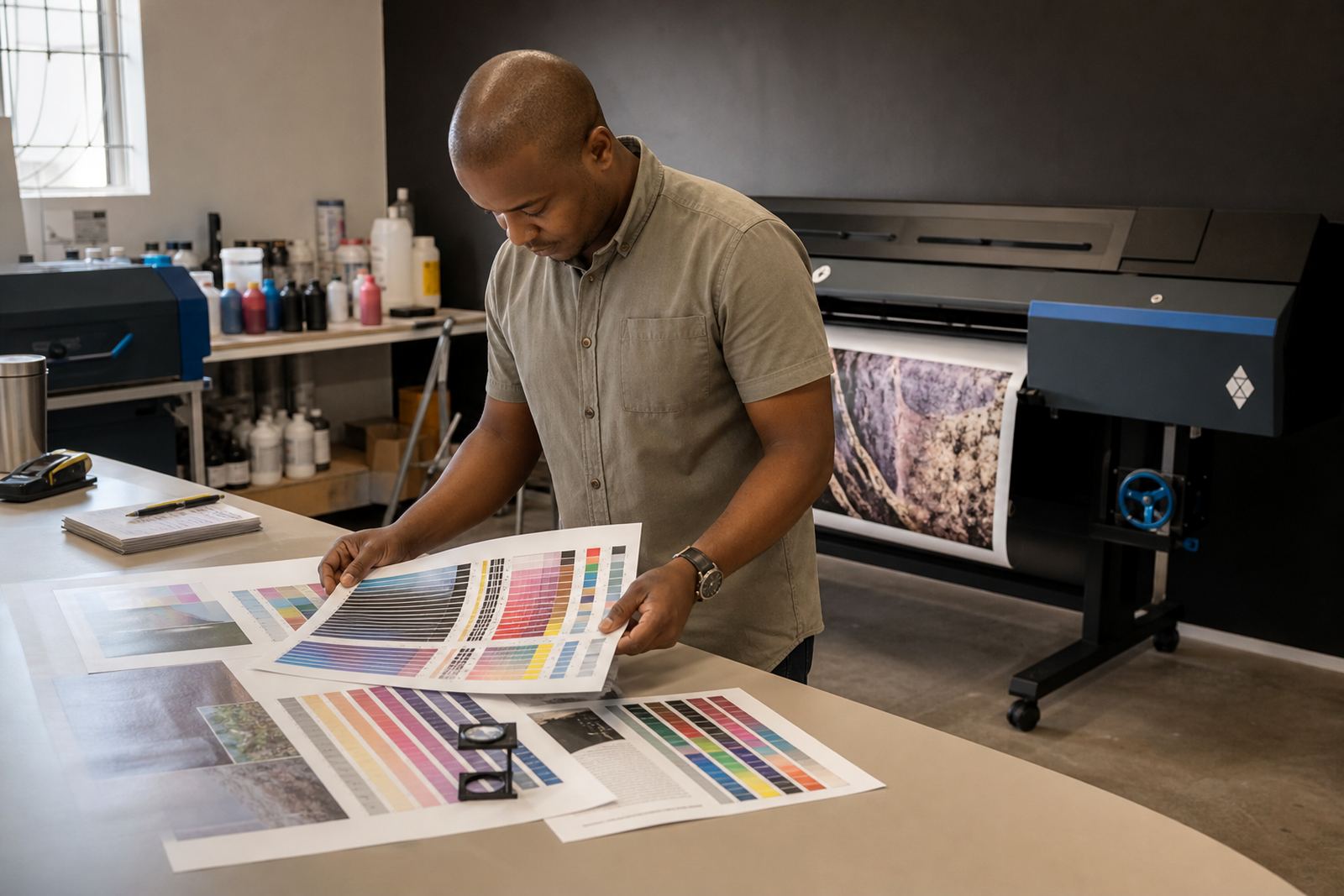
- Practical test print to confirm flow and colour balance
What the service includes in plain terms
Leak checking can stand alone, or sit beside cartridge refill advice and CISS setup help. The service includes a fault assessment, handling of visible ink residue, basic tubing or seal correction where it is suitable, and guidance on the next practical step if a part needs replacement. We also explain how to reduce repeat leakage when the same unit is refilled again.
Where a client uses mixed stock, we help separate dye and pigment use so the wrong ink does not move through the wrong line. That avoids thick build-up in places that need smooth flow, and it keeps colour balance steadier across office documents, artwork proofs and longer format jobs.
- Refill point and cartridge body inspection
- Tube and connector assessment
- Ink residue clean-up
- Chip reset guidance in general terms
- Advice on recycling empty cartridges
Pricing approach and service scope
We price leak checking according to the type of system, how many cartridges or lines need attention, and whether the fault is localised or spread across a full setup. A single refill cartridge takes a different amount of work from a multi-line wide-format arrangement with several joins and longer tubing. If a part has to be swapped, that is separated from the labour so the job stays clear.
There is no point guessing at a flat rate when the problem sits in different places on different machines. A small office with one or two cartridges needs a lighter touch than a print room running a larger continuous supply arrangement. We keep the pricing approach direct, with the work itemised around inspection, correction and any extra parts that the fault actually needs.
Aftercare once the leak is sorted
Aftercare covers practical use, not vague promises. We show you how to handle the cartridge or bottle without forcing air into the line, how to spot early seepage and how to store spare ink so it stays usable. If the machine is prone to printhead drying, we also point out the care steps that help keep the nozzles open and the flow steady.
For businesses that recycle empties, we can include empty return guidance so used cartridges are kept separate from working stock. That helps keep the workshop cleaner and cuts down on confusion when refills, chips and spent parts all sit on the same shelf. In Durban humidity, a dry wipe and tidy storage matter more than people often think.
Key facts
| Service area | Westville, Durban and courier support across South Africa |
|---|---|
| System types | Refurbished cartridges and continuous ink supply systems |
| Faults checked | Drips, seepage, air entry, loose seals and tubing issues |
| Ink compatibility | Dye and pigment guidance for office and wide-format use |
| Support options | Leak checking, printhead care, nozzle check support and chip reset help |
| Aftercare | Handling guidance, empty return routing and storage advice |