When the front counter keeps feeding the printer
A copy shop often prints the same jobs all day, then swings into thicker coverage for posters, notices, school packs and black and white handouts. That pattern puts pressure on cartridges, heads and colour balance, especially where there is a wide mix of machines behind the counter and in the back room. Our work with copy shops centres on keeping print stock moving without forcing every low cartridge warning into a new cartridge purchase.
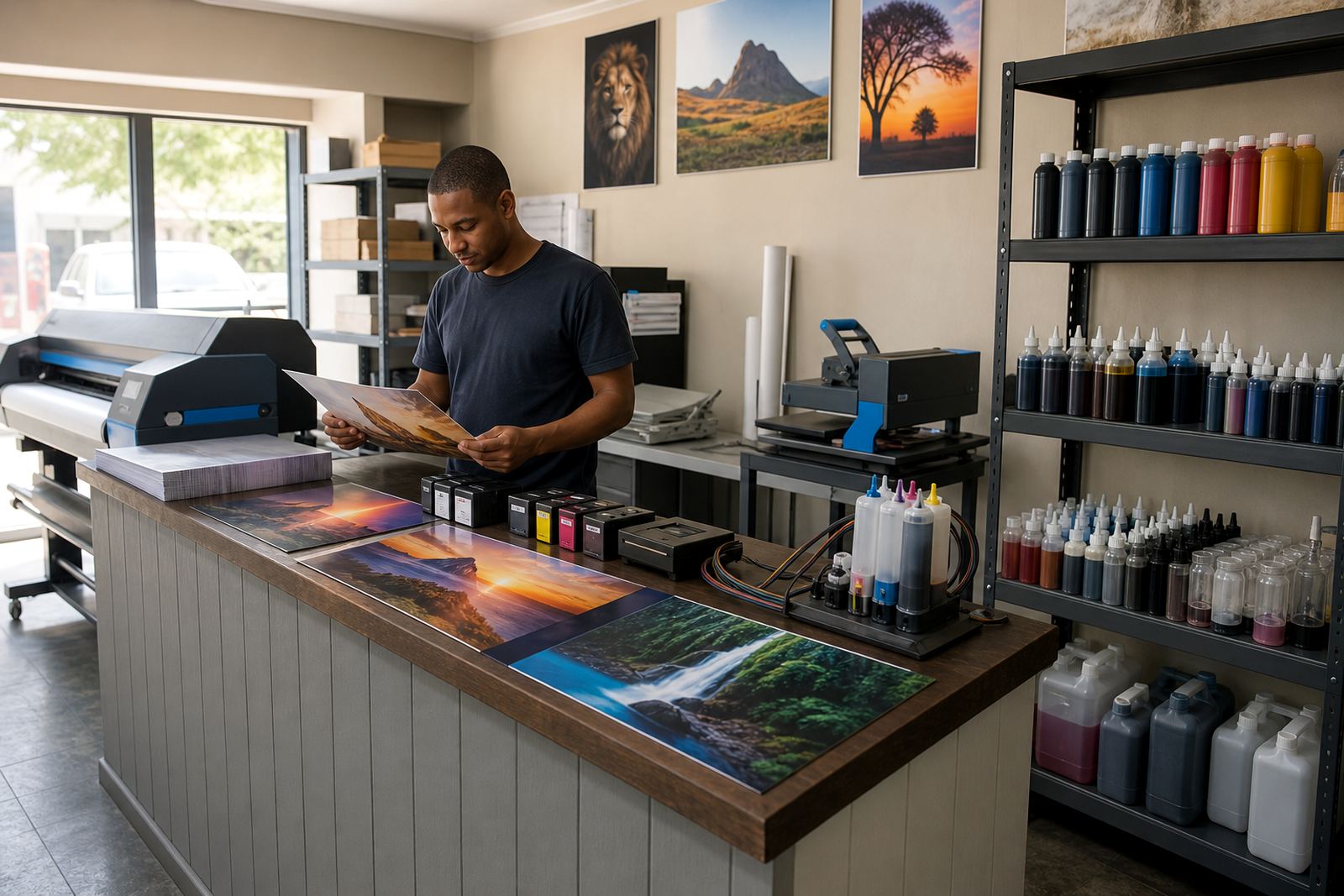
Refurbished cartridges suit shops that need a lower-cost option for regular office printing, short-run customer work and repeat copies. Bulk ink systems suit higher-volume counters where the printer stays active and the team wants a more manageable cost per page. For some counters, a cartridge refill rhythm is enough. For others, a continuous ink supply setup makes more sense because the printer spends less time waiting for attention and more time printing the next stack.
- Black text, invoices and forms
- Colour flyers, notices and classroom packs
- Short-run client prints at the counter
- Poster work for A3 and wide-format output
Machines and print habits that need a sensible plan
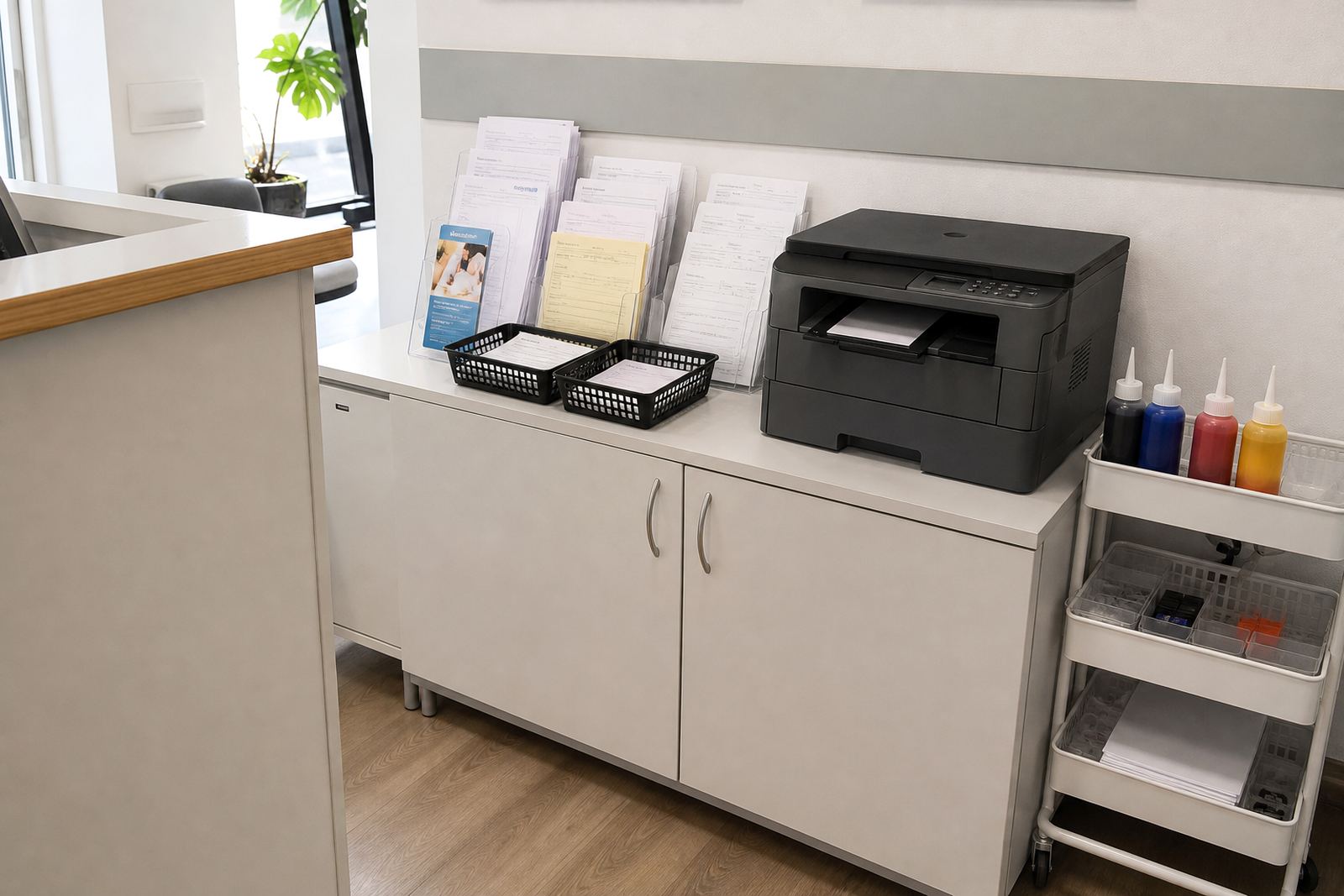
Copy shops rarely run one type of printer only. A front counter may use a compact multifunction machine for customer work, while a back office printer handles admin pages and a separate unit handles larger sheets or wider media. That mix changes the way ink should be planned. Dye ink can be useful for vivid colour work on suitable paper, while pigment ink is often preferred where sharper text and better water resistance matter more. The right choice depends on the machine and the papers in daily use.
We also look at nozzle behaviour, the condition of the printhead and the way a team handles ink changes. If a printer sits unused for too long, nozzles can block and colour output can drift. If refill work is rushed, spills and air in the lines can creep in. Where chip reset tools are suitable, they are used as part of a managed process, not as a quick fix that gets forgotten after the first alert clears.
- Office MFP units for walk-in copying and scanning
- Benchtop inkjets for admin and forms
- Wide-format printers for posters and shop signage
- Backup machines for peak periods and rush jobs
Layout choices that keep refills tidy
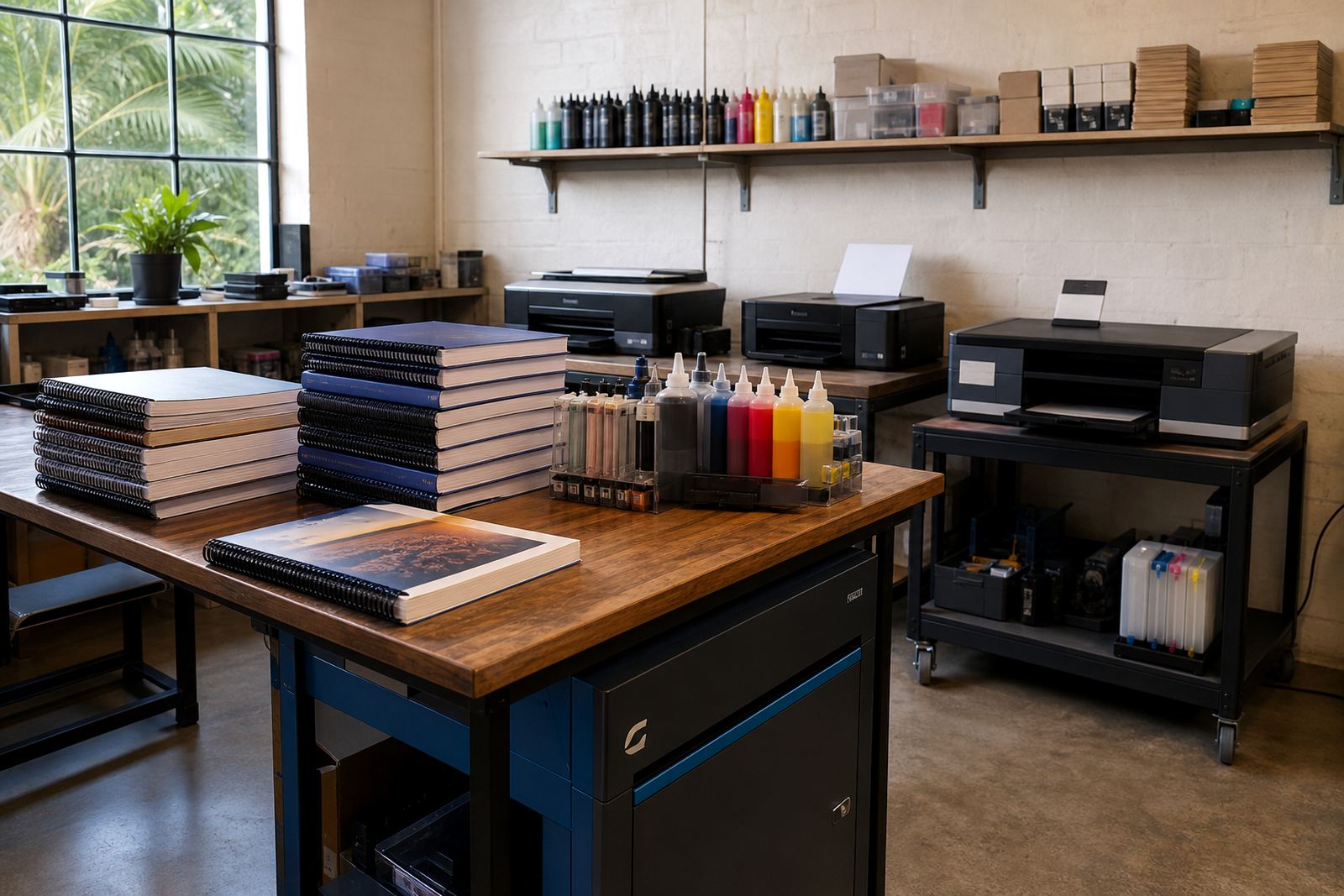
In a copy shop, the ink area should be easy to reach but away from paper dust, open drinks and heavy foot traffic. A small bench with absorbent cloths, labelled bottles and a clear place for emptied cartridges helps more than a crowded shelf full of loose items. If a system uses refill kits, the caps, needles and bottles need a fixed home so the team is not hunting for parts during a rush. The cleaner the station, the less likely a printer is to suffer from contamination or a bad fill.
We often advise shops to split their supplies into working stock and reserve stock. Working stock sits close to the counter for the machines in use every day. Reserve stock stays sealed until needed. That simple split cuts down on accidental mix-ups and keeps dust off parts that should remain clean. It also helps when courier deliveries arrive for shops in Durban, Pietermaritzburg, Johannesburg, Pretoria or Cape Town because the unpacking can happen in a few calm steps.
- Keep ink bottles upright and labelled by type
- Store emptied cartridges in a clean return tray
- Separate black, cyan, magenta and yellow stock
- Keep a cloth and gloves near the refill bench
Common mistakes that cost time and pages
Copy shops can lose more to small handling errors than to big equipment faults. A cartridge that is shaken too hard can leak. A tank that is filled with the wrong ink type can affect colour balance and clogging. A nozzle check skipped in a hurry can hide a blocked channel until a customer is already waiting. These are ordinary workshop problems, not unusual events, and they are easier to manage when the team has a set method.
Another common issue is using one printer for every type of job. When the same machine handles glossy colour prints, black text and heavy poster use without pause, the maintenance load grows fast. It helps to match the printer to the job where possible and to use printhead care as a routine task, not a rescue step. Empty returns matter too. Cartridges and tanks that are collected back into a return programme reduce waste and keep the counter from filling with dead stock.
For shops that rely on repeated demand, operator training can save more than people expect. A clear routine for checking levels, testing nozzles and handling refills means fewer spoiled sheets and less guesswork when a queue builds.
Budget lines copy shops usually plan around
The budget for a copy shop depends on the size of the printer mix, the number of pages printed each week and whether the business uses cartridges, refill kits or a continuous ink supply system. Refurbished cartridges can be a sensible fit for smaller machines and lower-volume counters, while larger shops often look at bulk ink to reduce the cost of repeated printing. Wide-format units, of course, need their own planning because they consume ink differently and use more careful handling.
As a broad working guide, small cartridge-based support might sit in the hundreds of Rand per cartridge set, while refill kits and bottled ink can move into the low thousands when several colours, spare parts and setup items are counted together. A full CISS arrangement for a higher-use printer, with setup help and testing, usually sits above that. The real figure depends on the machine and the number of systems being supported. Shops that keep a small reserve for cartridges, ink, cleaning and return handling tend to avoid sudden pressure on the counter when a busy week lands.
Where shops need courier delivery, stock planning becomes part of the budget too. It is better to schedule supplies around actual page flow than to wait until the last bottle is finished and the next queue is already at the door.
How our Westville team supports copy shop counters
Our Westville, Durban team works with copy shops that need practical help rather than generic sales talk. That can mean refill advice for an awkward printer, nozzle check support after a colour shift, leak checking when a tank has been moved, or guidance on the right ink type for the paper being used. We also handle chip reset help in general terms, printhead care, colour balance help and remote troubleshooting when a shop wants to keep its own process in house.
For shops that order often, stock planning help matters as much as the ink itself. Ayesha Majola handles operations, Mandla Zondi works on refill technique, Lauren Naidoo keeps the support side organised, Johan Mabena manages dispatch and courier movement, and Nokuthula Mabuza keeps the accounts and orders in order. Sibusiso Kotze leads the team and keeps the work grounded in the realities of office printing, walk-in counter demand and wide-format output.
If your copy shop needs a steadier ink plan, our contact form is the place to start. It helps with cartidge refill support, CISS setup help, empty return arrangements and the ordinary questions that sit behind a busy print counter.