
When plan sets move between counters, printers and meeting rooms
Engineering offices usually print more than letters and memos. There are drawings to mark up, revision sets to issue, test sheets to check line weight, and technical paperwork that must stay sharp when a file moves from one person to the next. Refurbished cartridges and bulk ink systems suit that rhythm because they cut repeated cartridge buying and keep a steady flow of black and colour ink on hand.
In Westville, Durban and nearby business districts, humidity can affect storage if cartridges are left open or ink bottles are kept near windows. A sensible setup starts with closed containers, clean handling and a printer room that is not crowded with dust, paper trim or coffee spills. If the office uses many small print runs, bulk ink can be easier to manage than replacing a full cartridge set every time a tank runs low.
We work with offices that need plain office printing and technical output from the same machine. That often means one printer for black reports and another for colour drawings or presentation sheets, with the main question being how to keep line work consistent without wasting ink on avoidable reprints.
The printer mix that usually makes sense in a technical office
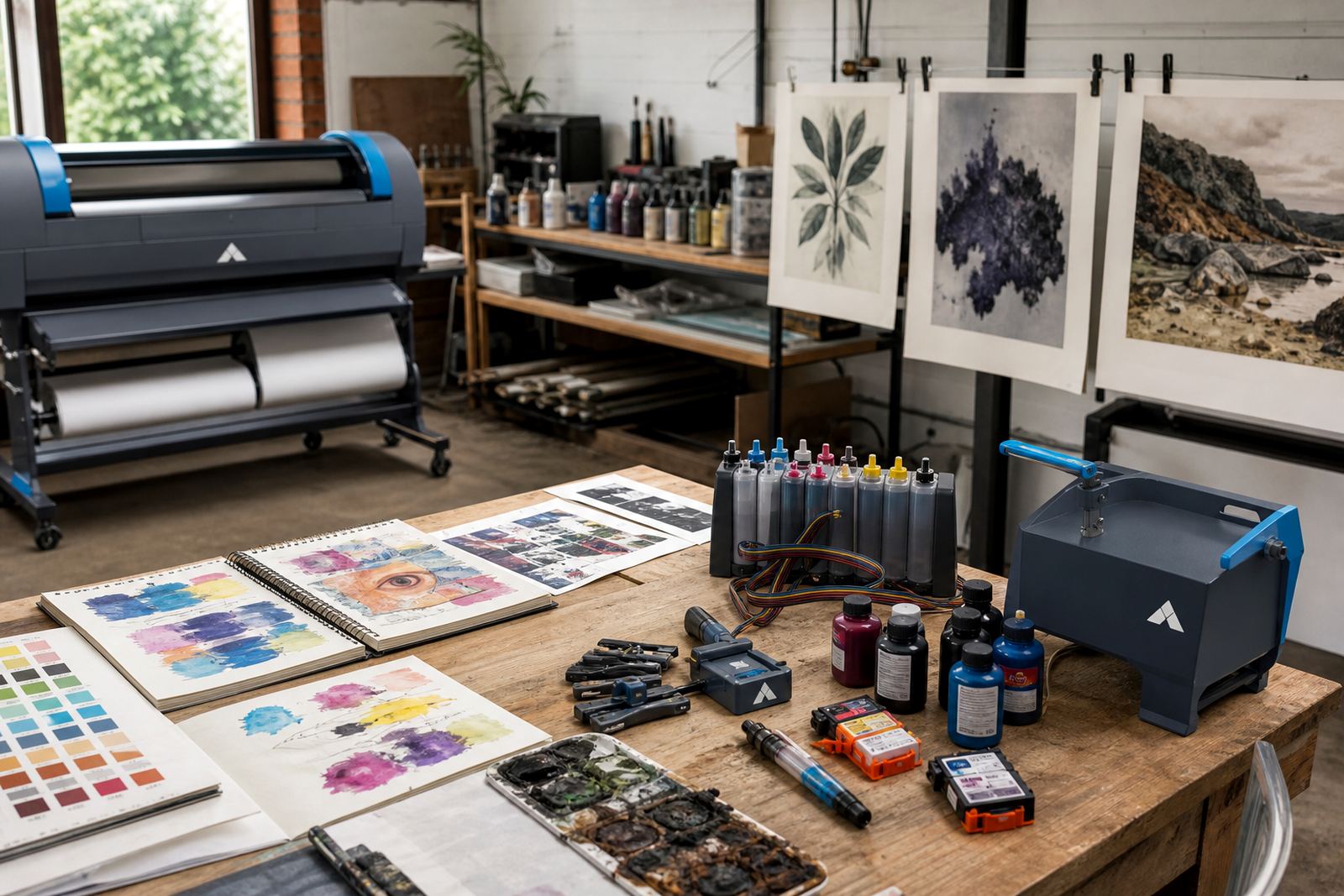
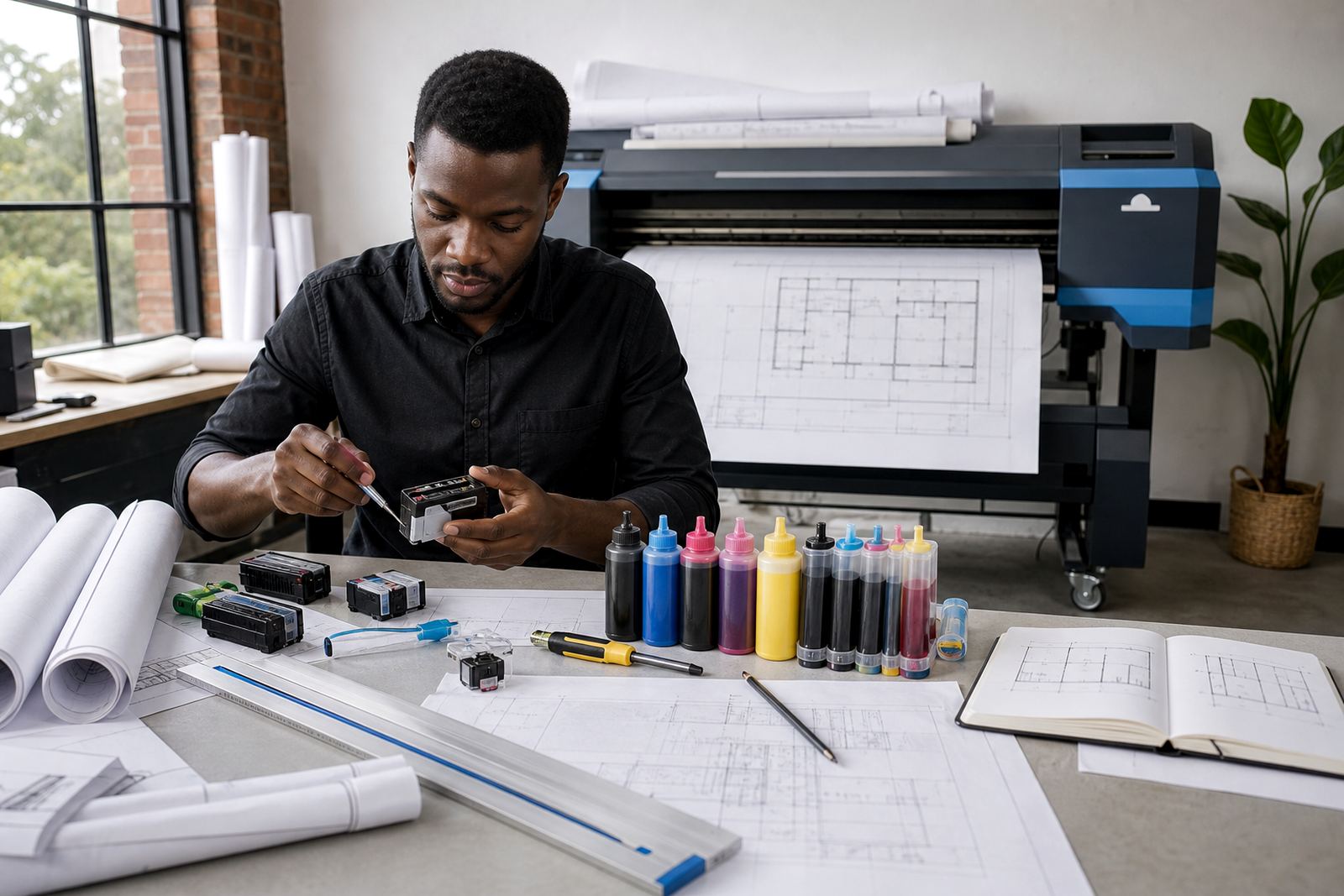
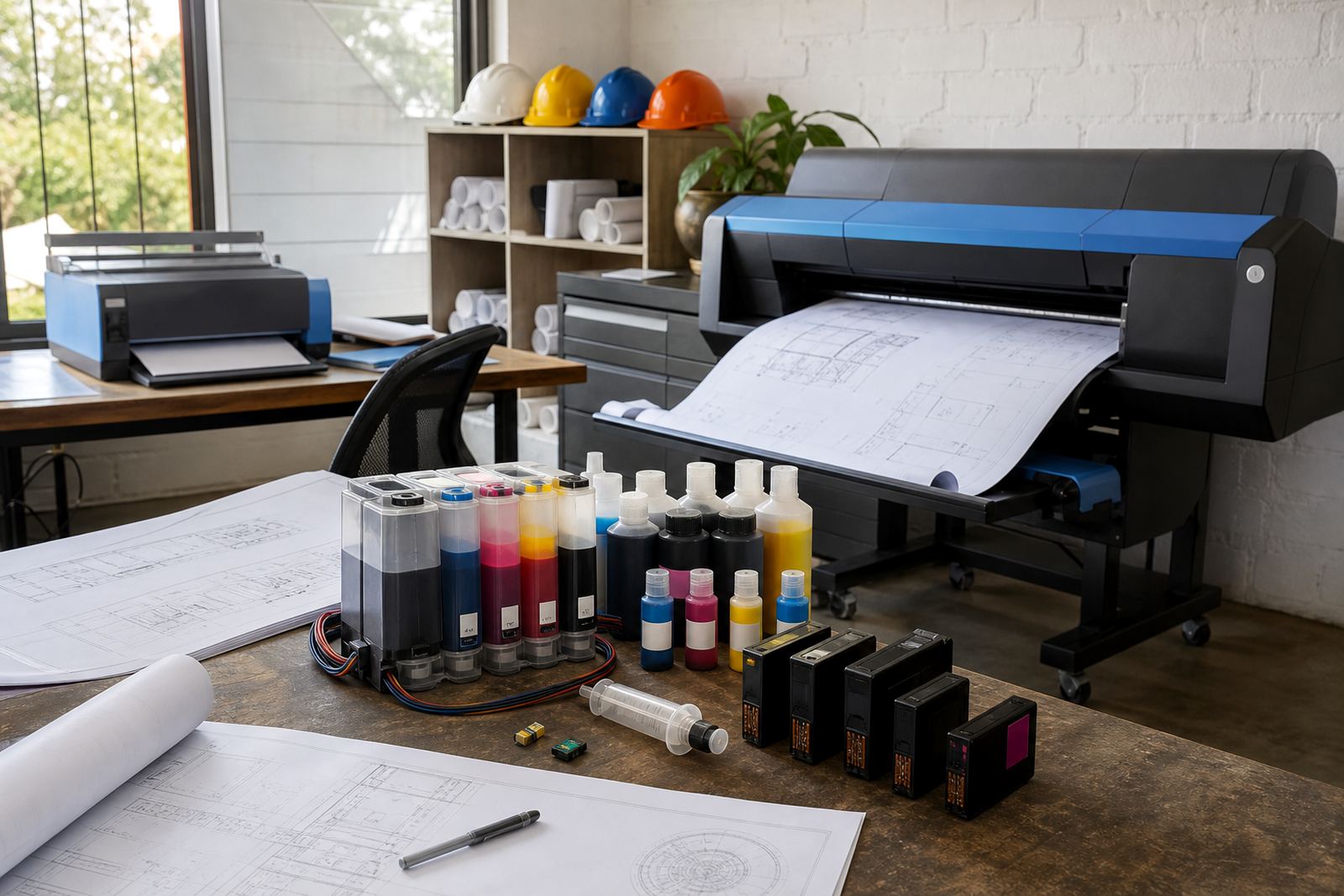
Engineering teams often use a mix of benchtop printers, multifunction units and, in some offices, a wide-format machine for drawing sets. Refurbished cartridges are useful where the printer asks for individual colour replacement and the print volume is moderate. Continuous ink supply systems and refill kits help where black text, colour coding and plan annotations are printed in higher volume.
- Black cartridges for reports, schedules and spec notes.
- Colour cartridges for markups, revision clouds and status sheets.
- Bulk ink systems for office printers that see daily output.
- Wide-format support for line drawings, site plans and presentation boards.
- Chips, resetters and cartridge checks where the printer needs recognition after a refill.
Ink type matters as well. Dye ink usually gives bright colour and smooth shading on office paperwork, while pigment ink is better where sharper black text, better water resistance and stronger line definition are needed. Some offices use pigment for black and dye for colour, which can work well if the printer supports that setup and the team keeps the cartridges clearly labelled.
Refill planning that keeps drawings legible
Technical offices lose money when a printer is run until it runs dry, then the next batch of drawings comes out streaky or faded. Printhead care matters because a blocked nozzle can distort thin lines, especially on plans with fine grids, shaded symbols and numbered callouts. A sensible refill routine includes nozzle checks, cleaning when needed and monitoring ink levels before the last pages in a set are printed.
For teams that store archive copies or issue working drawings to site, colour balance is worth keeping under control. Blue and red annotations must read clearly, and grey shading should not drift into a muddy tone. That is where refill advice helps, because a printer can behave differently after a cartridge swap, a tank refill or a long idle period.
- Keep one person responsible for top-ups and cartridge tracking.
- Record which printer takes pigment black and which takes dye colour.
- Test a single page before running a full drawing set.
- Store spare cartridges upright and sealed.
- Use the empty return programme so spent cartridges do not pile up in drawers.
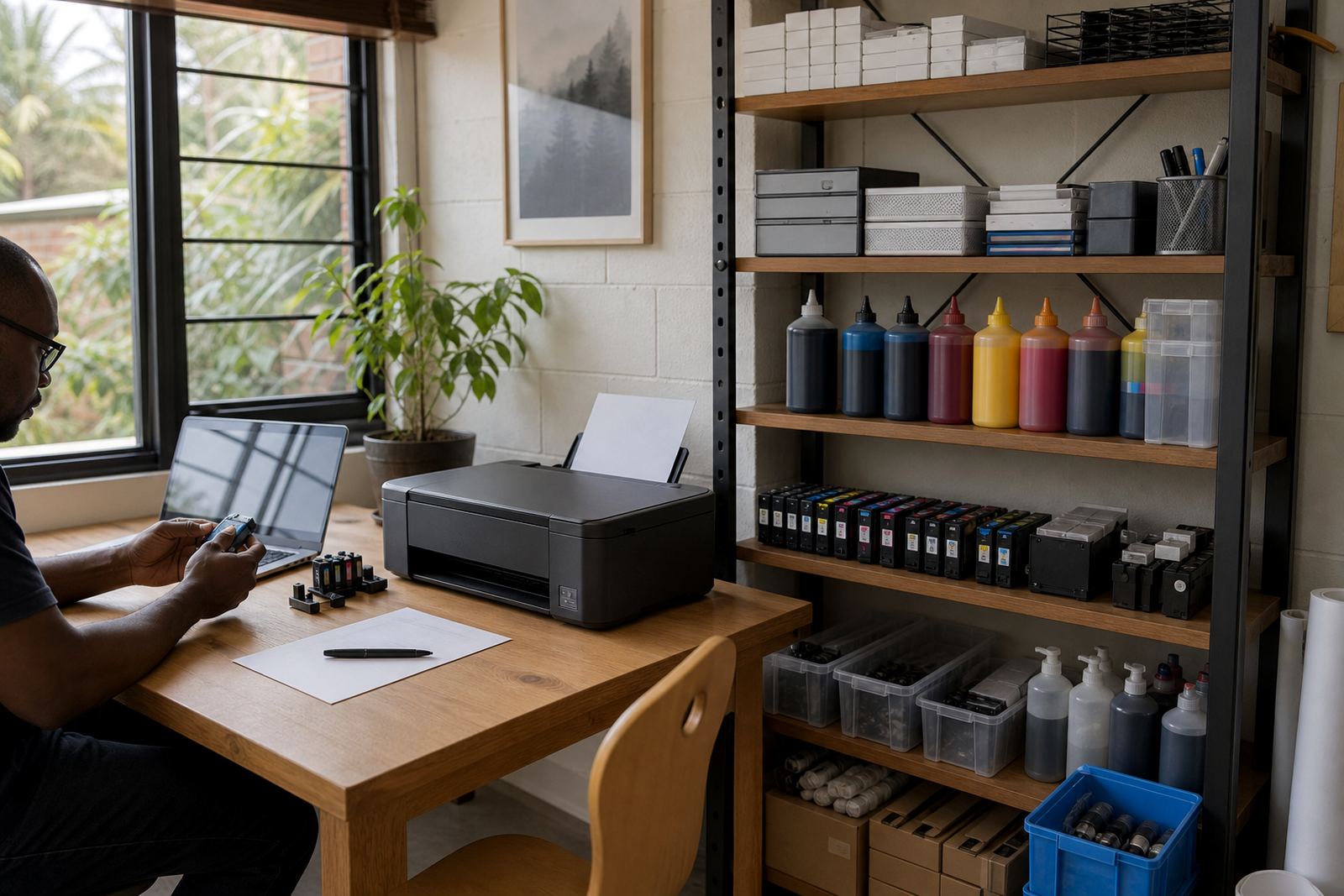
When offices are split across floors or have a reception printer far from the working area, it helps to keep spare ink near the machine, but not in direct sun. In coastal Durban air, open packets and loose caps can become messy quickly, so a small locked cupboard or labelled tray is better than a shelf full of unmarked bottles.
Common mistakes that waste ink and time
Most problems in engineering offices come from rushed handling, not from the printer itself. People mix cartridge types, top up the wrong colour chamber or forget that a printer needs a nozzle check after long idle periods. Another common problem is using the wrong ink for the job. A cartridge filled with the wrong blend can produce dull black text or soft colour marks that look acceptable on screen but poor on paper.
Wide-format printers need extra care because they use more ink per job and they hate poor storage. Dust in the workshop, heat near a window and old media rolls can all affect the finished sheet. If the office also handles tender packs or consultant submissions, a clogged printhead at the wrong moment can set the schedule back and create avoidable reprints.
For offices in Pietermaritzburg, Johannesburg, Pretoria and Cape Town, courier delivery makes it practical to keep a small buffer of cartridges and refill supplies on site. That buffer should match the real print load, not a guess. A two-person design room uses ink differently from a twelve-person engineering team with constant revisions.
Budget ranges that fit office printing without waste
There is no single Rand figure for engineering office printing because usage changes by team size, printer model and how often drawings are reissued. A small office that prints mainly correspondence and a few marked-up drawings can often work with a modest monthly spend on refurbished cartridges and refill supplies. Larger offices with regular colour output and one or more wide-format machines need a bigger ink budget because test prints, revision sets and presentation sheets add up quickly.
A practical budget usually has three parts: replacement cartridges or refill ink, maintenance items like cleaning supplies or reset help, and a small contingency for urgent reprints. Offices that keep print logs tend to spend less because they spot heavy users, repeated error pages and machines that are being overworked. It also helps to compare the cost of replacing whole cartridges against the cost of a refill system over a longer period, especially where the printer is used every day.
Many engineering offices start by stocking black ink, then add colour after they see how often drawings and presentation pages are produced. That approach keeps the spend tied to actual use, not guesswork. Our contact form can be used for supply planning, refill advice and support for the printer mix you already have in the office.
Westville base, courier delivery and support across South Africa
From our Westville, Durban base we support offices that need a reliable source of refurbished cartridges, bulk ink and practical refill guidance. The team works with engineering spaces in Ballito, Hillcrest, Pietermaritzburg, Johannesburg, Pretoria and Cape Town, with courier delivery arranged for offices, studios and print rooms that need supplies sent to the right place.
Clients often ask for help with cartridge recognition, chip reset questions, leak checking, printhead care and nozzle checks. Those details matter because engineering paperwork needs clean output, not trial and error on the morning a plan set must be issued. A tidy stock room, labelled ink and a regular check of what each printer actually uses can save a lot of waste over a month.
- Refurbished cartridges for office printers and workgroup machines.
- Bulk ink systems for steady black and colour output.
- Advice on dye versus pigment ink use.
- Support for empty returns and stock planning.
- Operator training for teams that share one printer room.
Whether the office is a small consulting space or a busier technical team, the goal is the same: keep drawings readable, reduce cartridge waste and keep the printer room in order. The right setup is usually the one that matches the actual print load, not the one that looks tidy on paper but fails when the revisions start piling up.